
Alternatives to UserTesting: 9 best platforms for user research in 2026
Compare 9 UserTesting alternatives by participant quality, research methods, AI features, and pricing to find the right platform for your team.



Learn how to research user persona motivations and apply them to onboarding, feature prioritization, messaging, and retention using real qualitative and behavioral signals.
In 2025, the difference between a product that users tolerate and one they champion often comes down to a single factor: how well you understand why they do what they do. User persona motivations sit at the heart of this understanding, yet many teams still treat them as an afterthought, or skip them entirely.
This guide walks you through everything you need to define motivations, research them properly, and turn them into actionable insights that shape your product or service, messaging, and roadmap decisions.
Motivations are the core reasons users choose, stay with, or abandon a product in today’s digital environments. They’re not surface-level preferences, they’re the underlying forces that explain why a feature matters or why a user upgrades (or churns).
Motivations are more stable than specific features, UI trends, or even the tools themselves. While a user’s preferred app might change quarterly, their desire to reduce anxiety before board meetings or protect personal time remains constant. This makes motivations a strategic anchor for persona work that outlasts product cycles.

Add from PixabayUploador drag and drop an image here
Clear alt text
Basic demographic personas, age, role, income, location, were the industry standard for years. But leading product teams in 2024–2025 have moved far beyond them, building motivation-rich personas based on user research that reveals the actual drivers behind decisions.
Relying only on demographics leads to generic solutions. Two users who share the same job title, age, and city can have opposite motivations. One marketing manager might prioritize innovation and experimentation; another might focus on risk-avoidance and proven tactics. Serving them the same experience misses the mark entirely.
Motivations drive the decisions that matter most to your business:
Tangible impacts of motivation-driven personas:
Consider this contrast: Rebecca and Marcus are both 30-year-old marketing managers in London. Rebecca is motivated by innovation, she wants to experiment with new channels and be seen as a forward-thinking leader. Marcus is motivated by risk-avoidance, he needs predictable results and tools that won’t fail during a live campaign. The same product experience would frustrate at least one of them. Detailed user personas that capture these distinct motivations let you develop solutions that serve both.
A single user persona usually contains a mix of motivational types. Someone might be driven primarily by time savings (functional) but also by career advancement (achievement) and a desire to avoid embarrassment in front of colleagues (emotional). Understanding this blend helps you create messaging and features that resonate on multiple levels.
Here are the most common motivation categories, with concrete examples:
Functional/Utility
Financial
Emotional
Social/identity
Career/achievement
Convenience/comfort – If you are seeking expert guidance in the SaaS industry, check out the top SaaS consultants in India for hands-on support and strategic advice.
Ethical/values-based approaches are important when conducting market research fundamentals, ensuring integrity and respect for participants.
Not every category is relevant for every product. When creating personas, prioritize the 2–3 dominant motivational types that your target user group exhibits most strongly. A good user persona focuses on the motivations that actually influence behavior, rather than trying to cover every possible driver.
Motivations must come from actual data, not internal guesses. The most common persona failure is when teams project their own assumptions onto users instead of gathering data from actual customers. Plan to revisit your motivation research at least every 6–12 months to keep your personas based on current reality.

Add from PixabayUploador drag and drop an image here
Clear alt text
Here’s a practical 4-step research flow:
Step 1: Collect qualitative data
Start with 10–20 user interviews, focusing on existing users who recently made key decisions (signed up, upgraded, churned, or became power users). Supplement interviews with customer support logs from the last 6 months—these contain unfiltered frustrations and desires. Sales call recordings are goldmines for understanding buyer personas and the questions prospects ask before converting.
Step 2: Layer quantitative signals—For a more holistic approach, consider integrating empathetic research methods to understand consumer motivations at a deeper level.
Use product analytics to validate patterns you’re hearing in interviews. Look at feature usage data, upgrade paths, churn reasons in exit surveys, and usage data around key workflows. If 70% of churned users never activated your reporting feature, and interviews reveal they were motivated by time savings on reporting, you’ve found a critical gap.
Step 3: Synthesize recurring themes (such as those used in buyer persona development)
Use sticky-note sessions (physical or digital via Miro, FigJam, or Notion) to cluster the “why” themes emerging from your research. Look for phrases that repeat across multiple sources. Group similar motivations together and identify which appear most frequently and with the most emotional intensity.
Step 4: Validate with cross-functional stakeholders (See Research Problem Formulation: Methodology Guide for effective strategies to define your research foundations.)
Bring your synthesized motivations to PM, UX, marketing teams, and sales teams for a validation session. Customer success teams especially will have valuable insights about what motivates long-term users versus those who churn early. Refine which motivations are strongest by segment before finalizing your detailed personas by utilizing primary data collection for market research.
Interview questions that reveal motivations:
Here are some user research questions to gain insights for product development (user research for product managers: A complete guide):
Don’t overlook the value of mining verbatim phrases in support tickets, NPS verbatims, and G2/Capterra reviews. When multiple users describe their motivation in similar language (“I just need to get out of the office by 6”), you’ve found authentic voice you can use in messaging and persona profiles.
Motivations “behave” differently depending on the persona type you’re building. A daily user has different drivers than an economic buyer, even when they’re evaluating the same product. In complex B2B customer journey scenarios, you’ll often need multiple new personas to accurately represent the decision-making unit.
Individual user persona: “Kevin, 26, Junior UX Designer”
Buyer persona: “Rebecca, 32, Product Marketing Manager”
Power user persona: “Mario, 39, customer success manager”
When mapping these motivations, consider creating a simple grid that aligns each persona’s name, their role in the decision (buyer/user/influencer), and their top 3 motivations ranked by strength. This helps marketing teams and the engineering team get on the same page about who they’re building for and why.
In B2B contexts especially, the customer persona buying the tool often has different motivations than the users who interact with your product daily. A Head of Finance (buyer) might be motivated by cost predictability, while the analyst (user) is motivated by time savings on reconciliation. Both need to be satisfied, but through different experiences and messaging.
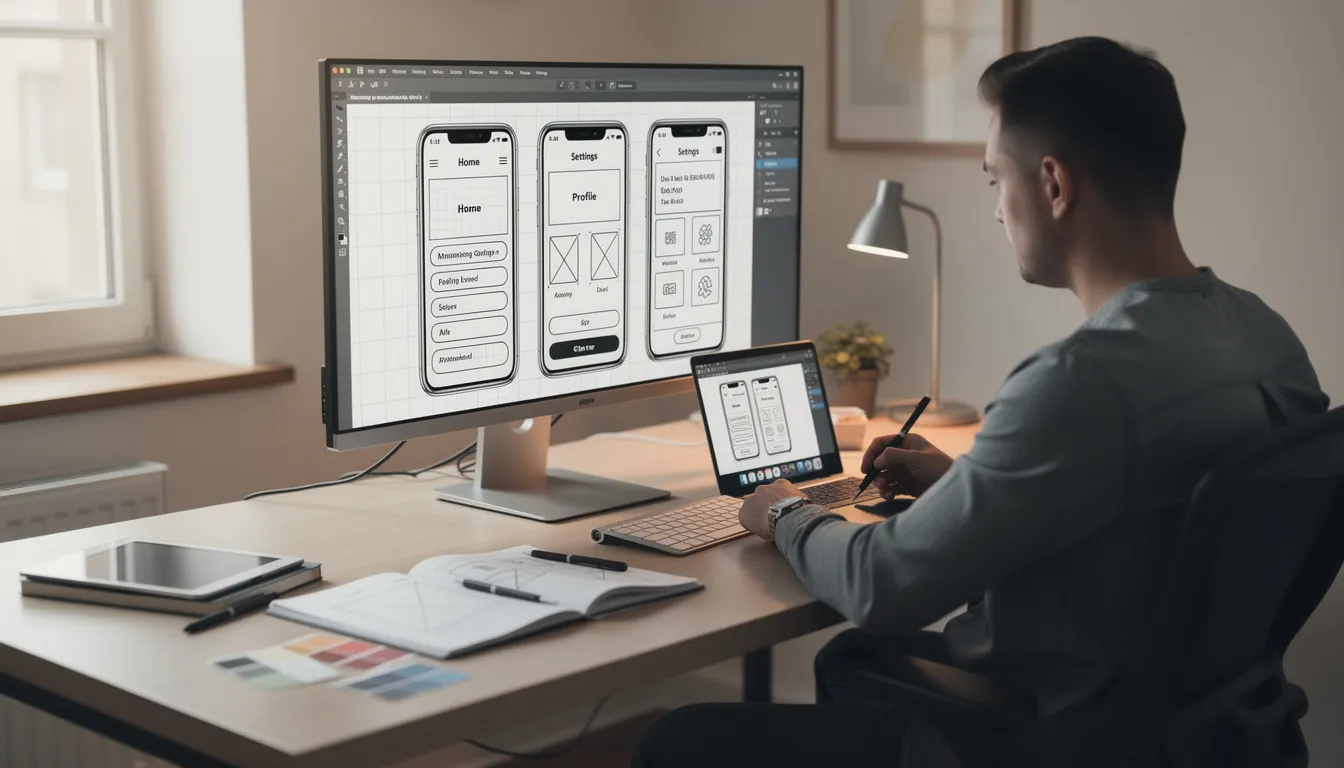
Motivations should actively drive UX, feature design, pricing, and messaging, not just live in a persona slide that no one opens after the initial workshop. The entire process of persona creation only pays off when motivations shape real decisions.
Add from PixabayUploador drag and drop an image here
Clear alt text
Here’s how motivations translate into product and marketing decisions:
Feature prioritization
If “time savings on reporting” is the top motivation for your target audience, prioritize one-click dashboard generation over cosmetic UI refreshes. When evaluating your roadmap, ask: “Which of our top 3 persona motivations does this feature serve?” If the answer is none, reconsider its priority.
Onboarding flows
Interested in pursuing opportunities related to UX research jobs?
Tailor first-run experiences to address motivations immediately. If your persona’s experience centers on proving ROI to leadership, show them how to generate their first impact report within the first 10 minutes. If convenience is the driver, highlight how few steps it takes to complete core tasks.
In-product messaging
Write microcopy that echoes motivations. Instead of generic “Your report is ready,” try “Your monthly report is ready, that’s 2 hours saved this week.” When you craft messaging around what users actually care about, engagement increases measurably.
Pricing & packaging
Design tiers around motivational outcomes rather than feature lists. A “Growth” plan emphasizes career and revenue growth benefits. An “Enterprise” plan emphasizes security, compliance, and risk mitigation. The features may be similar, but the framing matches different buyer personas.
Support & education
Create docs, templates, and webinars that help users achieve outcomes tied to their motivations. If your persona is motivated by looking competent in front of clients, create presentation-ready templates they can customize in minutes.
End-to-end example: For a customer persona motivated by job security, show how the product helps them avoid costly mistakes (automated validation checks), share evidence of their work with managers (shareable reports with their name visible), and document impact over time (performance dashboards). Every touchpoint reinforces that this tool makes them indispensable.
Many teams either skip motivations entirely or phrase them so vaguely that they’re useless in practice. Here are the most frequent errors and how to avoid them:
Being too generic
Generic motivations don’t change any decisions. Specific ones do.
Treating company goals as user motivations
Always frame motivations from the user’s role perspective, not your revenue targets.
Copying from competitor templates without validation
Ignoring negative motivations
Mixing aspirations with accurate assumptions
Failing to revalidate after market shifts
Quick guardrails to keep motivations actionable:
Here are three detailed personas with motivation sections grounded in specific context and realistic details:
Amira, 29, Social media manager at a DTC brand in Berlin (2025)
As a Social Media Manager at a direct-to-consumer skincare brand with 45 employees, this persona regularly uses tools such as Notion, Later, Canva, and TikTok Creator Studio to manage content and campaigns.
Motivations:
Hiro, 41, Head of IT at a mid-market logistics company in Osaka
Role: Head of IT
Company: Regional logistics provider, 800 employees
Reporting to: CFO
Motivations:
Lena, 23, University student using a learning app in Toronto
Lena is a third-year Biology student who is balancing maintaining her scholarship while working 20 hours a week in retail. She prefers to use mobile-first devices for her studies and daily tasks.
Motivations:
Motivations:
These fictional characters are grounded in real behavioral patterns observed in usability testing sessions and user research. Notice how each motivation connects to a deeper understanding of the persona’s background, constraints, and goals.
Motivations evolve as markets, tools, and user contexts shift. The post-2020 remote work transition fundamentally changed how people think about flexibility and work-life boundaries. The 2023–2024 economic uncertainty made job security and cost optimization top-of-mind for many. Your personas must evolve too.
Recommended maintenance cadence:
Triggers for immediate motivation refresh:
Version your personas. Document changes like “Persona v2.1, motivations updated after Q2 2025 research” so teams can see how motivations evolved. This also helps new team members gain insights into why certain design decisions were made historically.
Treat personas as living documents. A persona template that hasn’t been updated in 18 months is documenting historical users, not current ones. Regular revalidation ensures your own user personas continue to accurately represent the people you’re designing for.
Access identity-verified professionals for surveys, interviews, and usability tests. No waiting. No guesswork. Just real B2B insights - fast.
Book a demoJoin paid research studies across product, UX, tech, and marketing. Flexible, remote, and designed for working professionals.
Sign up as an expertInstantly discover and recruit world-class industry experts, C-suite executives and consultants for research.